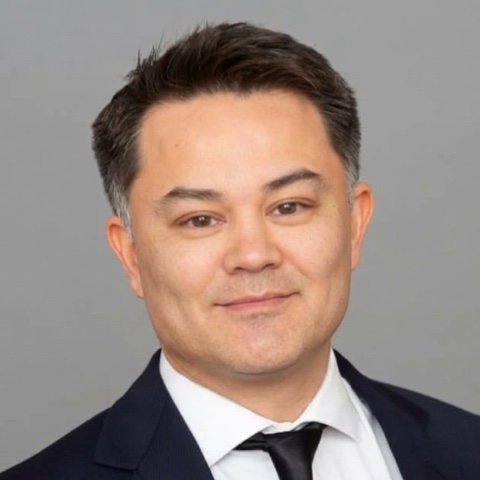
Hamid Dashti
Geospatial Computational Scientist
Research Computing Center, University of Chicago
I study how ecosystems respond to disturbance and climate change, from leaves to the globe, using remote sensing, Earth system models, and geospatial AI.
About Me
I’m a remote sensing and Earth system scientist studying how terrestrial ecosystems respond to environmental change. In my work, vegetation is the glue connecting Earth system to human systems, from local climate to global food security. I combine ecological theory, field and eddy covariance observations, remote sensing (optical, lidar, fluorescence), and mechanistic and data-driven modeling to study disturbance, surface energy balance, and productivity across scales.
I’m currently a Geospatial Computational Scientist at the University of Chicago’s Research Computing Center, where I lead geospatial initiatives in GeoAI, remote sensing, and Earth system modeling. Previously, as a postdoc at UW–Madison, I studied how canopy structure shapes global productivity and how changes in productivity cascade into food systems. Before that, at the University of Arizona, I worked on NASA’s ABoVE program on the carbon cycle and surface energy balance of Arctic and boreal regions, and most notably introduced the concept of counterfactual recovery for non-stationary ecosystems such as boreal forests. I earned my PhD in Geosciences from Boise State University, where I combined lidar, hyperspectral imagery, and vegetation modeling to study fire and productivity in drylands.
I’ve been involved with NASA’s PACE and SBG missions, NEON, and FLUXNET, and have secured more than $1 million in research funding.
Research
Vegetation, Disturbance & Ecosystem Recovery
I study how ecosystems respond to disturbance (fire, land cover change, climate
variability) and what "recovery" means when ecosystems are non-stationary.
I introduced the concept of counterfactual recovery, showing that Arctic–boreal
disturbance recovery is misjudged when measured against pre-disturbance conditions rather
than undisturbed trajectories (GRL, 2024; among the journal's most-read papers of 2025).
Earlier, I showed that conventional approaches underestimate how land cover change alters
surface energy and temperature across the Arctic–boreal region of North America (ERL, 2022).
Earth System Modeling & Data Assimilation
I integrate Earth observations into process-based models (CESM/CLM, E3SM, ED2, SiB, GCAM)
to improve our understanding of the carbon cycle, surface energy balance, and land–atmosphere
interactions. I have contributed to assimilating satellite leaf area and biomass observations
into CLM5, constraining simulated carbon uptake and land surface energy exchange globally and in
the Arctic–boreal region (co-authored, JGR Biogeosciences, 2022, 2024), and I parameterized and
evaluated the Ecosystem Demography model for sagebrush drylands (GMD, 2019; AFM, 2021).
Remote Sensing & Vegetation Physiology
From hyperspectral leaf trait retrieval to global Solar-Induced Fluorescence (SIF) from
OCO-2, I develop and apply remote sensing methods to track vegetation function at scale.
I work with the full observational stack: ground-based spectrometers, TLS, UAVs, airborne
campaigns including NEON AOP, and spaceborne sensors including GEDI, PRISMA, and PACE.
In a recent study (Ecology Letters, 2025), I combined data from nearly 400 eddy covariance
sites with satellite observations to show that canopy structure governs biome-level maximum
light use efficiency (a fundamental, intrinsic measure of a plant's capacity to convert
light into carbon) through both linear and nonlinear pathways. Earlier work combined lidar
and hyperspectral data to map dryland vegetation (Remote Sensing, 2019) and showed that
empirical nitrogen retrieval in drylands yields unreliable inferences about ecosystem function
(IEEE TGRS, 2019).
Vegetation, Food Systems & Climate Policy
A growing thread of my work connects Earth system processes to human systems. By coupling an
integrated assessment model with an Earth system model, I examined how changes in global
ecosystem productivity propagate through food systems beyond crops (preprint, bioRxiv, 2025).
I also secured a $150K postdoctoral fellowship to couple GCAM with Earth system models and
assess carbon mitigation pathways for the US dairy sector.